



































Terrorism and Corruption: Rethinking the Hierarchy of Threats
rule of law India, institutional reform governance, corruption in administration, state security challenges, development and corruption, political corruption issues

Terrorism and Corruption: Rethinking the Hierarchy of Threats
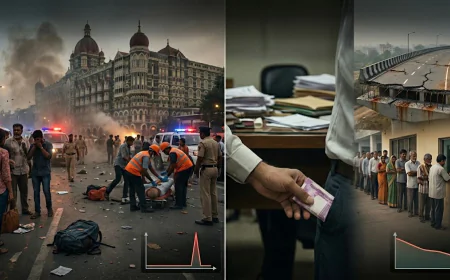
Terrorism is widely perceived as the ultimate threat to a nation’s security. Its violence is immediate, its intent explicit, and its impact emotionally searing. The 2008 Mumbai attacks, for instance, claimed around 200 lives and affected thousands more, leaving an indelible mark on the national psyche. Such events command attention because of their scale, visibility, and brutality.
Yet, this perception invites scrutiny when placed alongside the quieter, systemic damage caused by internal corruption. Consider the case of a public official like Kajal Meena, reportedly caught on video accepting a ₹60,000 bribe. At one level, it appears a minor, localized act. But such instances are rarely isolated—they reflect entrenched practices within governance structures. The consequences extend far beyond a single transaction: compromised infrastructure, denied welfare benefits, administrative delays, and exclusion of the most vulnerable from state support.
Herein lies the critical contrast. Terrorism is episodic; corruption is continuous. Terror attacks disrupt economic activity in bursts, but corruption imposes a silent tax on development—reducing efficiency, deterring investment, and fostering governance paralysis alongside erosion of the rule of law. While attacks may claim hundreds of lives, corruption steadily degrades the quality of life for millions.
However, equating the two entirely would be analytically imprecise. Terrorism seeks to destabilize through violence; corruption hollows the state from within. If the former demands vigilance, the latter requires deep institutional reform—without which national security itself remains fragile.