






























When Fiscal Consolidation Meets the Social Contract..
एक अर्थव्यवस्था में निवेश और रिटर्न का सिद्धांत सिर्फ व्यापार तक सीमित नहीं होता। सरकारी सेवाओं में लगे लोग भी अपने समय, प्रयास और जोखिम का निवेश करते हैं, जो समाज की स्थिरता और विकास में अहम भूमिका निभाता है। लेकिन बदलते नीतिगत ढांचे में उनके भविष्य और सुरक्षा को लेकर नए सवाल उठने लगे हैं…

Suppose an investor deploys capital in a venture. He earns dividends, and his net worth rises with the growth of the enterprise, though such growth depends on planning and decision-making.
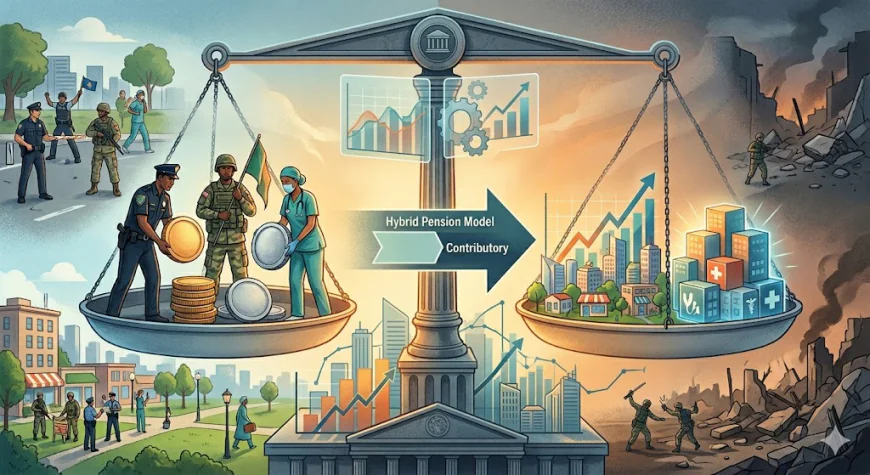
A similar economic logic may be extended to government servants. From policemen to army personnel, they make significant sacrifices to ensure stability and maintain law and order. For these efforts, they are compensated through salaries, analogous to dividends, while safeguarding human life and remaining prepared to risk their own in emergent situations.
However, their investment is not merely financial, but one of time, effort, and personal risk. This is recognised through social security benefits after retirement, including pensions and healthcare. Their contribution underpins the stability necessary for economic growth—conditions absent in conflict-affected regions such as Syria and Iraq, where instability inhibits investment.
Yet, in contemporary policy formulation, in the name of fiscal consolidation, pension benefits are being curtailed, and social security is increasingly made contingent upon individual contributions. This raises concerns about the denial of rightful dues, as government servants are not merely employees but stakeholders—arguably partners—in economic growth.
A balanced approach is therefore essential. Fiscal sustainability and intergenerational equity must be upheld, while ensuring robust social security. A hybrid pension system, drawing from models in the United Kingdom and the United States, may offer a viable path by combining defined benefits with contributory schemes, thereby balancing fiscal prudence with post-retirement security.
by shreeram...